This is the course description for a two-semester class (26 weeks). 75 minutes each week. Capped at 9 students. Multiple sessions may be scheduled depending on the demand for the class, but the first session is scheduled as follows. (Contact us if you’re interested in another time.)
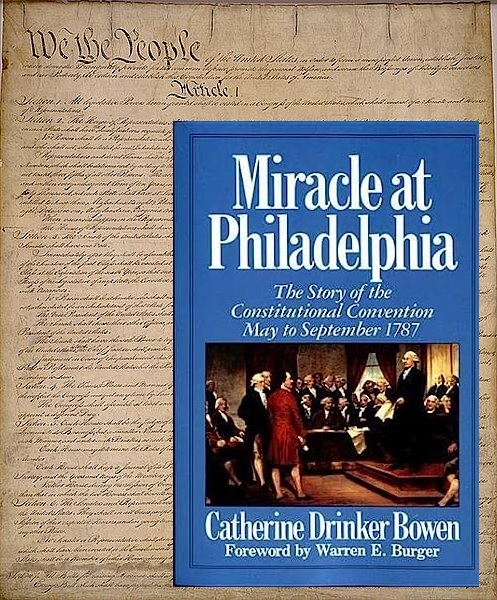
alongside the story of how it was created and why.
ABOUT MIRACLE AT PHILADELPHIA
This excellent book is on the recommended Year 9 reading list at AmblesideOnline.org. Our extended in-class narration/discussion of the book should be quite familiar for students being educated in the Charlotte Mason method.
WHO’S ELIGIBLE?
Homeschooled students from 9th to 12th grade and their parents or graduated siblings.
CREDITS
This course can be credited for history and civics/government, and also includes writing and vocabulary components.
Session 1 for School Year 2023/2024
TIME/DAY
Mondays from 9:00am to 10:15am
DATES
September 18, 25
October 2, 9, 16, 23, 30
November 6, 13, 20, 27
December 4, 11
January 8, 15, 22, 29
February 5, 12, 19, 26
March 4, 11, 18, 25
April 1
ALSO ON MONDAYS—10:30am-11:45am
I will shortly announce details for a 2-semester class: Reality-Based Thinking / Sway. Following the same model as this present course, the RBT/Sway class mixes the reading of the book Sway with the study of Reality-Based Thinking (honesty, rationality, responsibility). Like the Constitution/Miracle class, RBT/Sway may also be offered some other time during the week, depending on popular demand.
FEE
$200 for the course, payable on the first day of class in September.
ADDITIONAL EXPENSE
You buy the book, Miracle at Philadelphia, and bring it to class on Day 1. In addition to the book, you might also enjoy having the audio CD, which I own myself, and which is excellently read.
WHAT TO BRING
- A notebook and pencils, pens, etc.
- The Bowen book.
- (Optional) A smart phone, tablet, or laptop (batteries charged) with which to look up any questions that should arise in class, time permitting.
- Bottled water.
LOCATION
Meets in my studio space at
201 East Main Street
Laurel, MT 59044
(406) 696-4435
Short Description
This non-partisan course mixes the at-home reading and in-class narration/discussion of Catherine Drinker Bowen’s classic book, Miracle at Philadelphia, with a line-by-line study of the entire US Constitution (including its 18th Century vocabulary). It’s a heartsy-philosophical class, not too big or too small for good discussion, with lots of brain work to be done, from grasping the historical importance of what happened in the summer of 1787—to wrestling with the now-archaic vocabulary—to coming to grips with what the Constitution actually says, as compared and contrasted with our modern practice. It’s the ultimate big-picture civics class, and at the end, your student will be one of the few Americans who have actually read and studied the entire Constitution. And Bowen’s book will help give some rich historical context to the academic experience, making the Constitution come alive much more than it would in a study of its text alone.
Long Description
Let me say this right up front, to save some heartache for a few. If you’re looking for a class to defend your favorite political party’s view Constitution, or to bash the other party’s view, this isn’t going to be the right class for you. The goal of this course is to decouple from all of that long enough to learn the Constitution itself, and the history surrounding its drafting. An extended examination of the actual text will reveal quite plainly that members of both major parties today regularly violate the Constitution when it office.
I will think the course successful if the student is able for a time to decouple from his or her view of current politics sufficiently to view the US Constitution more objectively from a distance, so as to understand it for what it was in its day, and to ponder how it was that particular generation’s solution to the civic problems they faced. Having done this, I believe the student will be in a unique position afterward to pick up the topic of our current political scenario with a fresh perspective.
What’s Jack’s Philosophy About the Constitution?
In short, I think it’s a pretty good (though imperfect) idea, and it could be fantastic if most Americans understood the Rule of Law and the Golden Rule and such. I wrote a 1000-word essay a few years back, sizing up my view of the political system that evolved in America during the second half of the 1700s. It takes about 8 minutes to listen to my essay in the video below. Please do take the time to do it now.
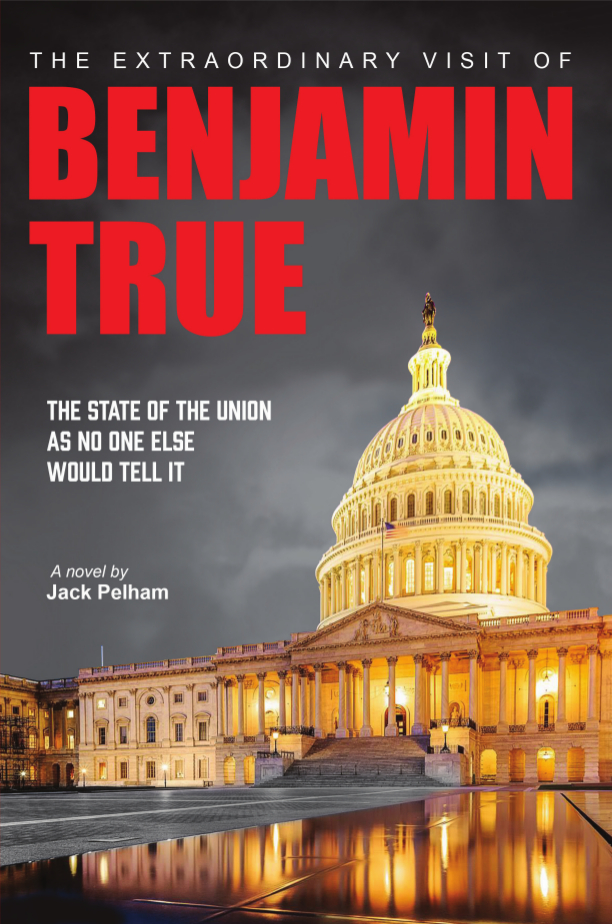
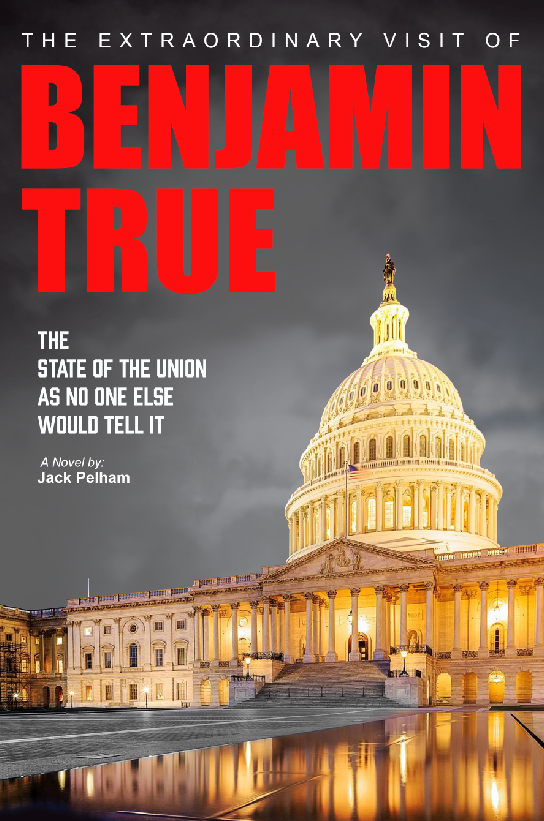
And if you want to learn even more about my non-partisan political philosophy on the current state of the Union, you can read my novel, The Extraordinary Visit of Benjamin True: The State of the union as no one else would tell it. Beyond that, I’m an active blogger with over 1,200 posts on this present website, ranging from politics to religion, and from poetry to prose.
You can also read over 750 of my Reality-Based Thinking memes at the Facebook group, Society for Reality-Based Thinking. None of these are patently political, but they most certainly deal with important principles that underlie politics.
The Mood of the Class
This class is quiet enjoyable for most students who would find the mention of the subject matter interesting at the start—and probably for some who would not. For most, it will be the longest ongoing conversation they’ve had about such matters, and may well awaken a new interest in such fruitful dialog. It’s also a good mental workout in topics like philosophy, history, civics, vocabulary, justice, economy, liberty, religion, and war. It’s a marvelous opportunity to think along with some long-term classmates through these very important topics—and to see how the framers chose to handle these things on their own watch. When this class is smaller like this (9 seats), the conversation becomes very comfortable for most (compared to the bigger enrollments I’ve had before), and the students often leave counting the rest as friends.
The content of the Constitution alone can be quite taxing as the language is old, and is legal in nature (and not conversational). By mixing in the Bowen book, however, it all comes to life much better. We’ll introduce it all with a big-picture layout of the document and of the historical/philosophical context of that point in American/World history. This way, by the time we get to the line-by-line study of the Constitution, the students will be well-acclimated to the subject and to each other, and thus, in a good frame of mind from which to give deep consideration to this most important document.
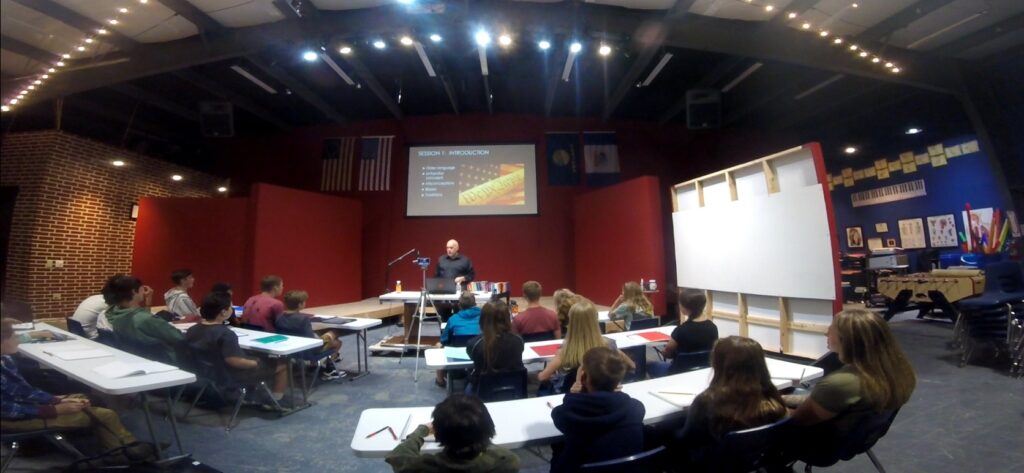
Written Narrations
We’ll split up the Bowen book into weekly at-home readings—normally, one chapter per week. We’ll have teacher-led discussion about the readings each week. The students will each write a short narration before they come to class. (Usually, about half a page, hand-written, is sufficient, though it can be longer if they want.) This gives them something of a guideline by which to remember their thoughts for the discussion. They will read their narrations aloud to the class to get the discussion going, and we’ll balance all that alongside our consideration of the Constitution itself. The students will keep their narrations in order in their notebooks, to make a long-term journal of the class experience.
Certificates
At the end of the course, each student having passed the course will receive a framed certificate for the course. They will be one of a very small percentage of Americans who’ve actually read the whole Constitution and processed what it means, within the historical context of the period in which it was written.
Code of Conduct
So that there are no surprises, and everyone’s expectations are well-regulated from the start, each student and parent will sign a Code of Conduct, detailing the expect behaviors that will make the class efficient and enjoyable for all. The following document is to be signed and submitted on or before the first day of class.
Special Needs Policy
If your student has any special needs or borderline special needs, please do take a few minutes to read my Special Needs Policy so that we can manage expectations excellently from the beginning.
Are other sections of this class available?
I will happily teach multiple sections of this class if there’s ample participation. (I won’t do it with fewer than 6 students per section.) If you’d like to take the class at a different time, let’s discuss the possibilities. Contact me here.
Questions?
You may contact me with any questions at (406)696-4435 or on the contact page here. Before you do, though, please understand that I have spent hours preparing and presenting all this information for you so that I won’t have to have text conversations with parents about this basic information that can be found 24/7 right here.
How to Register
You can register your students for this course on the Google form here. The form does two things: 1) Gives me crucial information about you and your student(s), and 2) Double checks that you have comprehended the information on this present page.